Your Cart is Empty


Last Updated: November 6, 2026
Quick Summary
Designer lighting is worth the cost when the fixture sits where the eye lands and hands touch, because better materials, craftsmanship and light quality hold up over years. Save on low-use spots like hallways and wardrobes, where a budget piece does the job just as well.
Walk into any lighting showroom and you'll see two pendants that look almost identical. One costs a few hundred dollars. The other costs several times that.
At UBERCOOL, we've spent over 16 years selecting lighting for homes, and we've heard this question in every form.
Below, we'll show you exactly where the money goes, where it's worth spending, and where a cheaper option makes perfect sense.
Designer lighting is a fixture designed and made with attention to material, finish and light quality, rather than built to hit a low price point. Budget lighting is built to look right in a photo and hit a price.
The gap shows up in three places: the materials, the way light leaves the shade, and how the piece ages.
Most of the price difference sits in things you notice over time, not on day one:
Cheap fixtures have a real place, and pretending otherwise is dishonest.
A budget pendant in a hallway or wardrobe does its job. So does a basic desk lamp in a spare room. If a fixture is rarely looked at closely or will be swapped out in a couple of years, spending more rarely pays back.
The mistake is putting a budget piece in the one spot everyone stares at.
The benefits of designer lighting rarely land on the day you install it. They show up in year three, when the finish still looks clean and the shade hasn't yellowed.
Three things hold their value:
If you're planning a room-by-room refresh, our guide to why quality lighting matters for homes walks through what each space actually needs.
Quality lighting fixtures are judged on measurable things, not adjectives. Ignore the marketing copy and check these instead, they are the same criteria a lighting designer uses when specifying a room.
Pick the fixture up, or read the spec sheet closely. Ask what the body and shade are made from. Solid basswood and natural wood finishes behave very differently from thin MDF and painted plastic.
Check the finish at the joins and edges. Rough edges and uneven coating are the first signs of a rushed build. A well-finished timber piece will age gently; a cheap plated finish tends to flake or discolour where hands touch it most.
These numbers decide how a room feels, and they matter more than the shape of the shade:
A few practical checks separate a well-made fixture from a costly one:
A beautiful fixture with the wrong bulb will disappoint you every evening. Budget for a good warm LED from the start, and check the CRI and dimming compatibility before you commit.
If you'd like help matching specs to a specific room, our guide to why quality lighting matters for homes walks through what each space actually needs.
Start with the room's job, then choose the fixture. That single rule removes most of the overwhelm.
Work through it in this order:
A common mistake is buying the pendant before deciding the room's mood. Choose the feeling first, then the fitting. If you'd like more support, these tips for buying designer lights online with confidence cover sizing, finishes and returns.
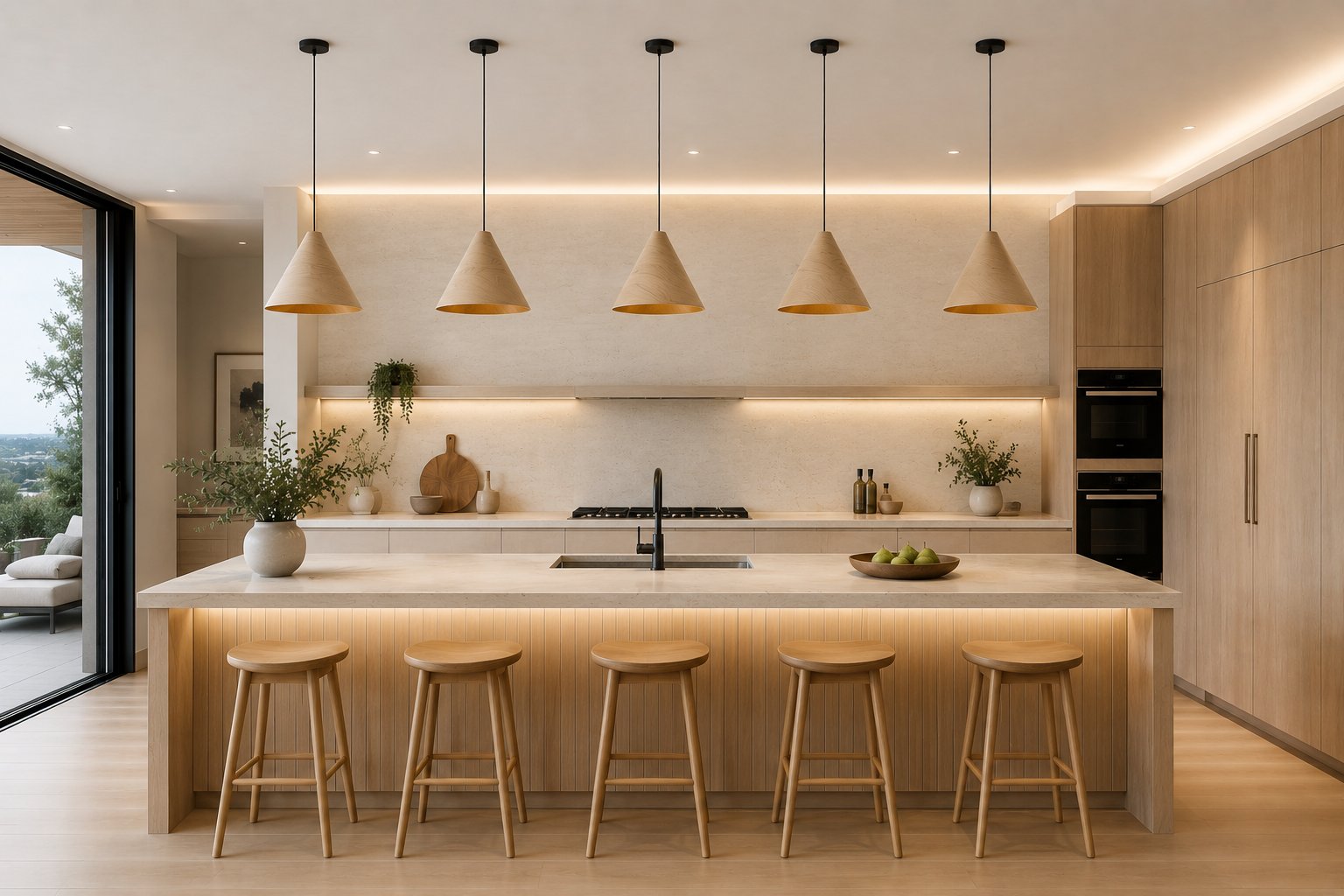
Spend where the eye lands and hands touch. Save where nobody looks.
| Space | Where to spend | Where to save | Why it matters |
|---|---|---|---|
| Dining room | Statement pendant | Side lamps | Everyone looks up at the table |
| Living room | Main fixture and dimmer | Hidden downlights | Sets the room's mood nightly |
| Kitchen | Bench pendants | Pantry lighting | Seen and used every day |
| Bedroom | Bedside pendant | Wardrobe light | Close to the face each night |
| Hallway | One feature piece | Utility fittings | First impression, low daily use |
For a full breakdown of the trade-offs, our buyer's guide on why choose curated designer lighting fixtures explains what to look for before you commit.
Most comparisons stop at the purchase price. The more useful question is what a fixture costs you over its whole life, and that is where a well-made piece usually pulls ahead.
A light's real cost is the purchase price plus everything you spend keeping it working:
A well-made pendant with a warm LED can run for years on very little power. The things that decide whether it lasts are less glamorous: the quality of the flex and fittings, and the quality of the finish.
The real test is trend relevance. A simple, natural form stays quiet and elegant. A loud trend piece dates fast. That is the difference between a long-term investment and an expensive mistake, and it is the one cost no spec sheet can show you.
If you are weighing up a statement piece against a safer choice, our buyer's guide on why choose curated designer lighting fixtures explains what to look for before you commit.
If you've decided to spend where it counts, start with a piece you'll still love in a decade.
Our Helix Pendant is handcrafted from natural basswood in a soft oval form, and it suits a bedside or a quiet dining setting. For something bolder over a large table, the Artichoke Pendant brings layered, diffused light and real presence.


Both take a standard E27 LED (not included), so you can choose the warmth and brightness that suit your room.
It depends on where the fixture goes and how long you plan to keep it. Designer lighting earns its price in the rooms you look at every day, because materials, finish and light quality hold up over years rather than seasons. In low-visibility spots like a wardrobe or laundry, a budget fitting does the same job for less. Spend where the fixture is seen and touched, save where it is not.
Price alone does not guarantee lifespan, but construction does. Fixtures built from solid materials with properly finished surfaces and serviceable parts resist the wear that shortens cheap fittings, such as flaking coatings, loose joints and wiring that cannot be replaced. Check the warranty terms and whether replacement parts are available before you buy. A well-made pendant with a standard E27 fitting can be kept for decades because the bulb is easy to change.
Start with material and weight, since a hollow, light-feeling fixture rarely ages well. Then check the practical details: the bulb type, whether it dims, the flex length, and the dimensions against your actual table or room. Look at the finish in daylight where possible, and ask how the light is diffused rather than just how bright it is. A piece that suits your room's proportions will always look more considered than one chosen on trend.
Pendants over a dining table or kitchen island, a living room floor or table lamp, and anything in an entryway are the pieces guests notice and you use daily, so they justify a higher spend. These are also the fixtures where craftsmanship and material quality are most visible. Smaller utility lights, closet fittings and secondary task lamps are sensible places to save, because their job is function rather than atmosphere.
The hardest part isn't the budget, it's trusting your own eye. That's where we can help. UBERCOOL offers a personally selected range, over 16 years of experience, and honest advice on what suits your space. Get started with UBERCOOL and choose lighting that makes your house feel like a home.


