Your Cart is Empty


Last Updated: October 30, 2026
Quick Summary
Curated designer lighting is a hand-picked range of fixtures chosen for aesthetic quality, build standard and lasting appeal, rather than a catalogue organised by price and stock volume. Choosing curated over mass-market means the filtering is already done for you, with guidance on scale and placement and a preference for timeless over trendy pieces.
Mass-market lighting fills a room with light; curated designer lighting fixtures shape how that room feels. At UBERCOOL, we personally select pendant, floor, table and wall lights for homes, so the filtering is already done for you.
Curated designer lighting is a hand-picked range of fixtures chosen for aesthetic quality, build standard and lasting appeal, rather than a catalogue organised by price and stock volume.
A bigger catalogue just moves the hard work onto you. Curated ranges filter by look, materials and longevity, come with guidance on scale and placement, and favour timeless over trendy.
Approach |
What You Get |
The Catch |
Best For |
|---|---|---|---|
Mass-market browsing |
Huge range, low prices |
You do all the filtering |
Tight budgets, temporary fixes |
Curated designer range |
Pre-filtered, quality-checked pieces |
Smaller range, higher cost |
Renovations, long-term homes |
Custom or bespoke |
Exact fit to your space |
Long lead times |
Statement rooms |
Matching fixtures to your interior starts with the room's existing materials and mood, not the fixture itself, note the dominant finishes (timber, stone, plaster, metal) and let your lighting echo at least one.
Lighting styles for different interiors follow recognisable patterns: modern and contemporary (slim linear fixtures, matte black or brass, clean geometry), Scandinavian (pale timber, soft white shades, simple pendant forms), industrial (exposed metal, aged finishes, cage or factory-style pendants), and classic and transitional (glass, fabric shades, softer curves).
Then apply the practical checks most buyers skip: measure ceiling height first (low ceilings need low-profile or flush mounts; high studs suit longer pendant drops); scale the fixture to the surface below (a pendant over a dining table should span roughly half to two-thirds of the table's width); check the finish against your hardware; think about the bulb, not just the shade; and look at the piece from below.
Watch out: ordering a pendant without checking the drop against your ceiling height is a common mistake. If you work with an interior designer, ask what they would specify, a second opinion often catches a scale error before you order.
Layered lighting means combining three types of light in one room so each does a distinct job: ambient fills the space, task supports specific activities, and accent adds depth and focus. Get all three right and a room feels finished; skip one and it feels flat.
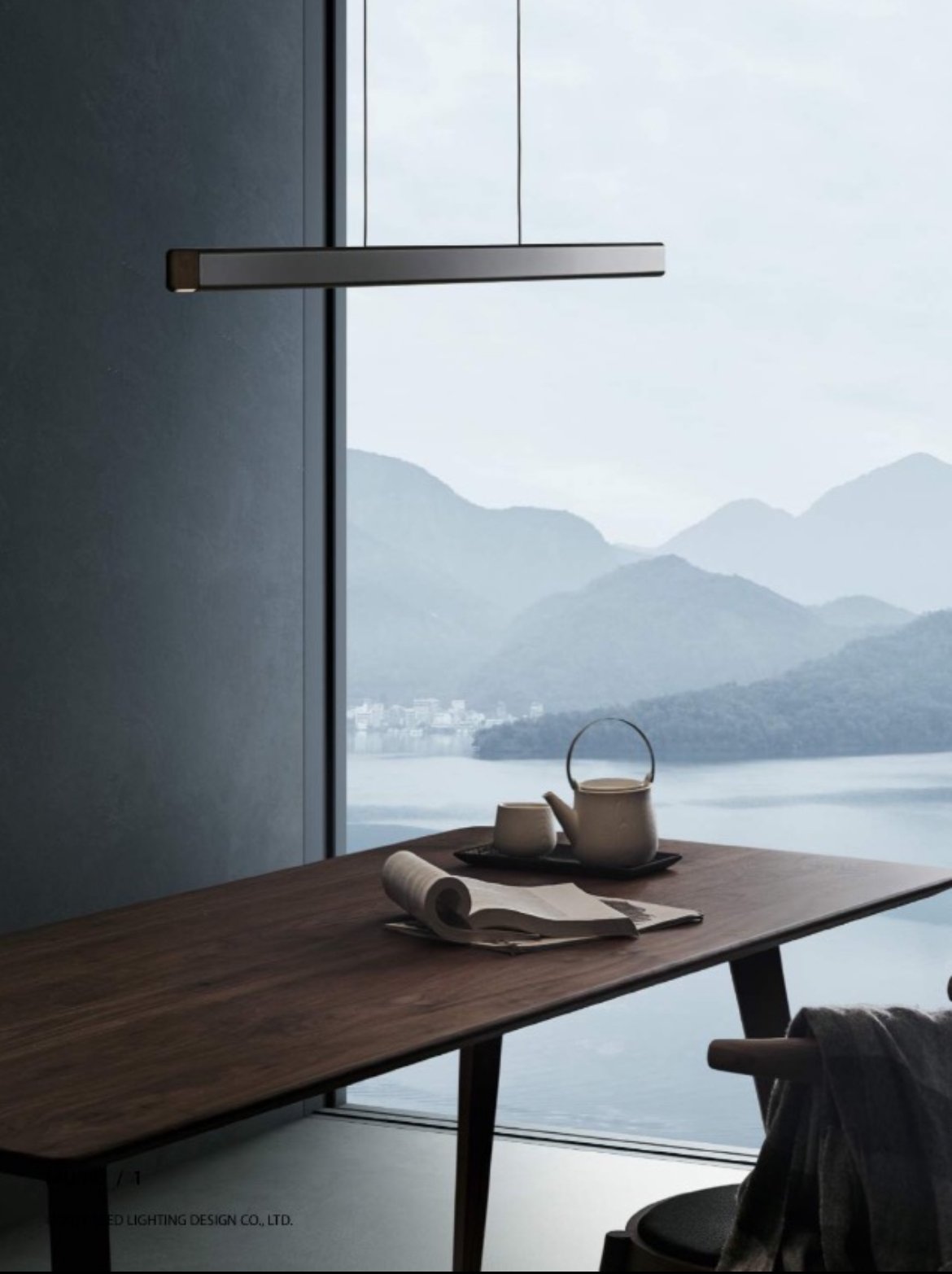
Ambient lighting is the base layer, replacing or supplementing daylight, soft and even, usually carried by ceiling fixtures and uplights. Task lighting is directional, lighting what you are doing: pendants over a kitchen island, desk lamps and reading floor lamps. Accent lighting creates atmosphere, wall lights grazing a textured wall, a lamp picking out artwork, or a low floor lamp in a corner.
A simple way to plan it: start with ambient light and get the level right, add task light exactly where hands and eyes work, finish with accent light on the features you want noticed, and put each layer on a separate switch or dimmer where you can. Dimming matters more than most people expect: dropping the ambient layer in the evening while keeping accent lights on turns a bright room into a warm one. Energy-efficient LED options can keep running all three layers economical. If you feel stuck, start with the room you use most and layer just that one.
A curated piece is selected for timeless design, so it can stay relevant through trends. When you weigh the years of use against the purchase price, a well-chosen designer lighting piece can add character that a generic fitting does not.
Start with what the room needs to do. Measure your ceiling height and the size of the table or island the fixture will sit above, then match the scale so it does not overwhelm the space. Think about the mood you want: a warm, low color temperature for relaxing areas, brighter task lighting for kitchens. Finally, consider the finish and shape against your existing furniture and materials. A specialist can talk through these steps with you if you are unsure.
Layered lighting means combining three types of light rather than relying on one ceiling fitting. Ambient lighting gives general illumination, task lighting covers reading or working areas, and accent lighting highlights artwork, textured walls or architectural features. Use dimming where you can so the room shifts from bright and functional to soft and atmospheric in the evening. A pendant or ceiling light, a floor or table lamp, and a wall light together create depth and flexibility that a single fixture cannot.
Choosing lighting for a whole home is a lot of small decisions, and they all affect each other. That is exactly where a curated range and honest advice save you time and regret. UBERCOOL brings over 16 years of experience, a personally selected range of pendant, floor, table and wall lighting, and practical guidance on scale, layering and style, all chosen for warmth, character and timeless appeal.
Get started with UBERCOOL and find lighting that makes your house feel like a home.


